Buying a lakefront home around Dandridge can feel exciting and a little tricky at the same time. A property that looks perfect on a sunny summer day may look very different in winter, especially on Douglas Lake. If you want a home, second home, or investment property near the water, it helps to know what to check before you fall in love. Let’s dive in.
Why Dandridge lakefront homes are unique
Douglas Reservoir is a major part of the Dandridge waterfront market. It stretches 43 miles upriver from Douglas Dam and includes about 28,420 acres of water surface and 513 miles of shoreline. TVA also describes it as a recreation destination for boating, fishing, camping, and picnicking.
What makes this market different is that the lake does not stay at one fixed level year-round. In a normal rainfall year, TVA says the reservoir level can vary by about 44 feet from summer to winter for seasonal flood storage. That means shoreline appearance, water access, and dock usability can change a lot depending on when you visit.
For you as a buyer, that matters more than many first-time lake buyers expect. A home that feels like true waterfront in summer may present very differently during winter drawdown or shoulder seasons. Seeing the property through a seasonal lens can help you make a smarter decision.
What kinds of waterfront properties you may find
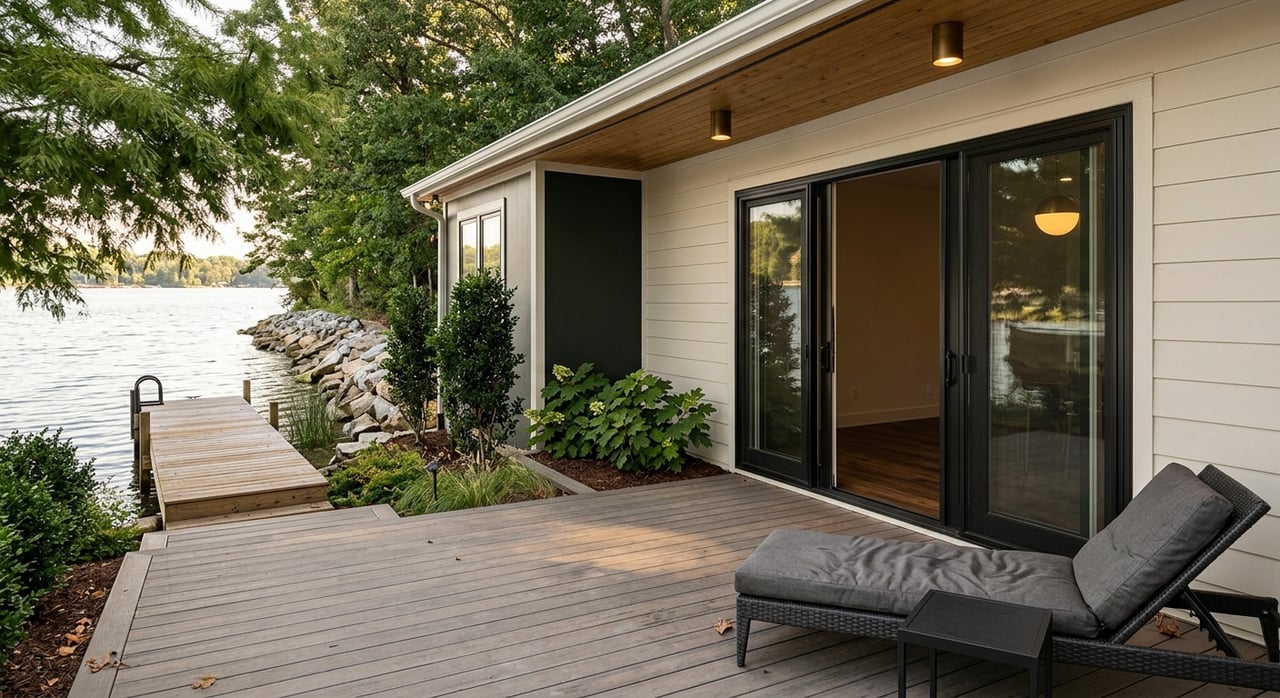
Not every property near Douglas Lake offers the same kind of water access. Around Dandridge, you may come across true waterfront homes, waterfront lots, homes with shared community access, and homes that are simply near the water. Those differences matter when you compare value and future use.
TVA distinguishes between private individual facilities, community facilities, private waterfront clubs, and public or commercial marinas. In practical terms, this means you should not assume that proximity to the lake includes private dock rights. Some properties have private shoreline features, while others depend on shared access or separate marina arrangements.
This is one of the biggest reasons lakefront shopping needs extra care. If private water access is important to you, the listing description alone is not enough. You will want to verify exactly what rights and features come with the property.
Dock rights are not automatic
One of the most common misunderstandings in waterfront real estate is assuming any waterfront lot can have a dock. TVA states that not all waterfront property is eligible for a dock. The necessary land rights must exist before a dock or other water-use facility can be permitted.
That means your due diligence should go beyond asking whether a dock is already there. You also need to confirm whether the existing setup is properly permitted and whether future changes would be allowed. If your goal is boating access, this step is essential.
TVA also has rules about what can be built. For example, second-story dock spaces may be open decks with railings, but they cannot be roofed or enclosed with siding or screening. If a dock is a major part of your buying decision, details like this can affect how you use the property.
Shoreline features to verify before you buy
With a Dandridge lakefront property, the shoreline itself deserves close attention. TVA advises buyers to verify shoreline improvements and compare them to the permit record. This is especially important when a home has been improved over time.
Items to review may include:
- Docks
- Piers
- Boathouses
- Ramps
- Land-based steps and walkways
- Shoreline stabilization or seawalls
- Utilities tied to shoreline facilities
- Vegetation management on TVA property
Even if everything looks well built, you still need to confirm it is approved as it exists today. A feature that seems minor on a showing can become a major issue if it was added or altered without approval.
The TVA permit check is critical
If you remember one step from this guide, make it this one. TVA says the Section 26a permit does not automatically transfer when waterfront property changes hands. A new owner must notify TVA within 60 days of acquiring the property and apply for a permit for any existing shoreline facilities.
That means you should compare the permit to what is physically on site before closing. TVA recommends confirming that all listed shoreline structures match the property, including docks, ramps, seawalls, utilities, and land-based improvements. If something exists on the property but not on the permit, you need to understand that before you buy.
TVA also states that all shoreline construction or alterations require approval, even minor dock changes. If you are already thinking about upgrades, repairs, or changing the shoreline setup, it is smart to ask those questions early.
Timing matters for shoreline changes
Some buyers assume they can purchase first and sort out shoreline updates later. In reality, timelines can matter. TVA says delays may happen when applications are incomplete or when environmental or encroachment issues need review.
TVA currently charges $1,000 for minor shoreline alteration applications and says it strives to issue minor permits within about 120 days. If your purchase plan depends on changing a dock, adding access, or adjusting shoreline improvements, that timing should be part of your decision.
This is especially important if you want to use the home during a specific season. A delay in permit approval could affect your move-in plans, boating setup, or rental timeline.
Flood zones need a parcel-by-parcel review
Flood risk is another major item for lakefront buyers. It should be checked one property at a time through FEMA’s Flood Map Service Center, which FEMA identifies as the official source for National Flood Insurance Program flood hazard information.
If a home is in a Special Flood Hazard Area and you use a federally regulated, supervised, or insured lender, flood insurance is generally required. It is also important to know that standard homeowners insurance does not cover flood damage.
For you, this means flood-zone status is not just a technical detail. It can affect monthly costs, lender requirements, and your comfort level with the property over time.
Septic and water questions matter in Jefferson County
Many buyers focus on views and water access first, but utility questions can be just as important. In Jefferson County, the Environmental Health Department handles septic permits for new construction. Its process can require a recorded plat map, a soil map, a staked house site, and final septic approval before the system is covered.
If you are buying land to build, septic feasibility should be one of your earliest checks. If you are buying an existing home, you still want to understand the system’s status and any records available through the county.
For homes with private wells, water testing also matters. The CDC says well owners are responsible for water safety and should test at least yearly for total coliform bacteria, nitrates, total dissolved solids, and pH. That makes water testing a smart part of your inspection process.
Short-term rental rules depend on location
If you are considering a second home or investment property, do not assume the same rental rules apply everywhere around Dandridge. Town and county rules are separate, so jurisdiction matters.
In Dandridge, short-term rental operators must follow local rules related to zoning, occupancy, parking, trash, noise, life-safety items, and a local contact. The application requires ownership information, a site plan, a parking plan, safety compliance documentation, and a 24-hour local contact. The current town permit fee is $300, the permit lasts one year, and operators must also have city and county business licenses and pay applicable occupancy and sales taxes.
In unincorporated Jefferson County, a short-term rental permit is also required before operating. The current application fee is $250, with a renewal fee of $200. Before you buy with rental plans in mind, confirm whether the property is inside Dandridge town limits or in the unincorporated county.
Why seasonal showings are worth it
Lake property is one of the few home types that can change dramatically throughout the year. TVA notes that water release schedules can change without notice based on weather or power-system requirements, and observed and predicted lake levels update throughout the day.
That means one showing may not tell the whole story. If dock access, bank slope, shoreline appearance, or rental appeal is important to you, it is wise to see the property in both higher-water and lower-water conditions when possible.
This can give you a much clearer picture of how the property lives in real life. It can also help you avoid surprises after closing, especially if your plans depend on easy water access.
A smart buying checklist for Dandridge lakefront homes
When you are narrowing down properties around Dandridge, keep your process focused on the details that matter most.
Use this checklist as a starting point:
- Confirm whether the property is true waterfront, shared-access, or water-view only
- Verify whether private dock rights exist
- Review the TVA Section 26a permit against what is built on site
- Check whether any shoreline changes or additions need approval
- Review flood-zone status for the specific parcel
- Ask about septic records and feasibility, especially for vacant land
- Test private well water when applicable
- Confirm whether the property is inside Dandridge or unincorporated Jefferson County
- Review short-term rental permit requirements if rental use matters to you
- Visit during different lake levels if possible
A careful process can protect both your lifestyle goals and your investment. On lake property, the details behind the view are often just as important as the view itself.
Local offices that can help answer questions
As you move toward a purchase, a few local and regional offices are especially relevant. TVA’s Public Land Information Center can help with shoreline questions. Jefferson County Environmental Health is a key contact for septic questions.
If your property may be used as a short-term rental or involves local development questions, Dandridge Building Development may be part of your process. For county-level permit and tax forms tied to short-term rentals, the Jefferson County Clerk may also be helpful.
Working with the right local guidance can make the process much smoother. It can also help you spot issues early, before they become expensive problems.
If you are thinking about buying a lakefront home around Dandridge, the best next step is to look beyond the photos and ask the right questions early. From TVA permits to seasonal water levels to short-term rental rules, lake property rewards buyers who do their homework. When you want local guidance tailored to your goals, connect with United Real Estate Solutions - Market Movers.
FAQs
What should you verify before buying a lakefront home around Dandridge?
- You should verify water access type, dock rights, TVA permits, shoreline improvements, flood-zone status, septic details, well testing needs, and short-term rental rules if applicable.
Can every waterfront property around Douglas Lake have a private dock?
- No. TVA says not all waterfront property is eligible for a dock because the necessary land rights must exist before a dock or other water-use facility can be permitted.
Do TVA shoreline permits transfer automatically when you buy Dandridge waterfront property?
- No. TVA says permits do not automatically transfer, and the new owner must notify TVA within 60 days and apply for permits for existing shoreline facilities.
Why do lake levels matter when buying a home near Dandridge?
- TVA says Douglas Reservoir levels can vary by about 44 feet from summer to winter in a normal rainfall year, which can change shoreline appearance, dock usability, and access.
How do short-term rental rules work for lake homes around Dandridge?
- The rules depend on whether the property is inside Dandridge town limits or in unincorporated Jefferson County, because each has its own permit system, fees, and operating requirements.
What utility issues should you check when buying Jefferson County lake property?
- You should review septic status and, if the property uses a private well, consider water testing for items such as coliform bacteria, nitrates, total dissolved solids, and pH.