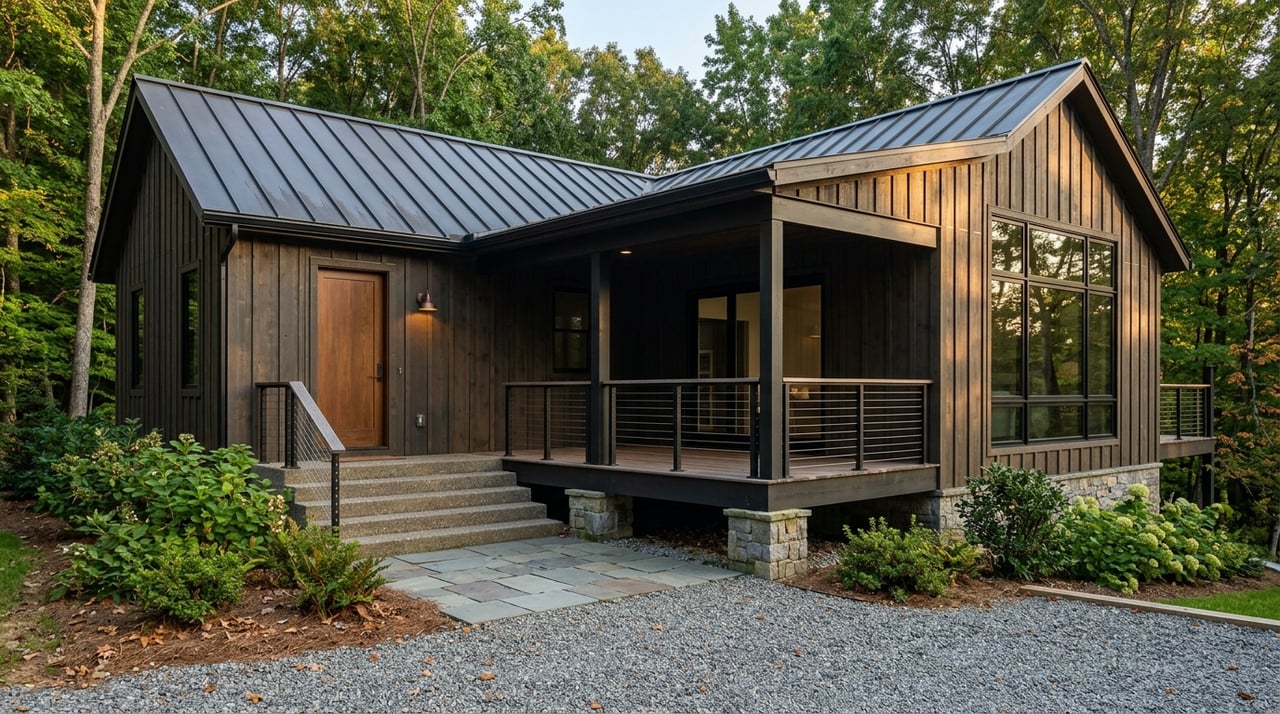
If you are looking at a cabin in Pigeon Forge and wondering whether it will actually perform as a rental, you are asking the right question. In this market, a beautiful property alone does not guarantee strong returns because demand is seasonal, operating costs can add up quickly, and rules can change from one jurisdiction to the next. When you know how to evaluate revenue potential, expenses, and compliance before you buy, you can make a much smarter decision. Let’s dive in.
Why Pigeon Forge Draws Rental Demand
Pigeon Forge is powered by tourism in a way few markets are. According to the City of Pigeon Forge facts page, the city has about 6,000 residents but welcomes more than 10 million annual visitors and more than 2 million overnight stays.
That visitor base is closely tied to the Smoky Mountains. The Great Smoky Mountains tourism impact data referenced by the city shows the national park recorded 11,527,939 recreation visits in 2025, and visitors spent more than $2 billion in nearby communities in 2024.
That does not mean every cabin performs the same. The city’s 2025 lodging overview shows there are 16,464 total lodging units in Pigeon Forge, including 2,906 cabins and chalets, or about 18% of the market. Cabins are a meaningful part of local lodging supply, but they are still competing with many other stay options.
Start With Market Benchmarks
Before you analyze one specific cabin, it helps to understand what the broader market is doing. This gives you a reality check on pricing, occupancy, and seasonal swings.
The city’s lodging overview reports average cabin occupancy at 55% and average daily rate at $271. Using those figures, a typical cabin would generate about $54,403 in gross annual room revenue before expenses.
A second useful benchmark comes from AirROI’s Pigeon Forge short-term rental dataset. That source reports average annual revenue of $51,084, ADR of $352, occupancy of 44.1%, and RevPAR of $159 for active listings from April 2025 through March 2026.
These two sources are best used as complementary tools, not direct apples-to-apples comparisons. The city tracks cabins through its own lodging framework, while AirROI focuses on active Airbnb listings over a 12-month period. Together, they help you build a more balanced view of what a cabin might do.
Check Seasonality Before You Underwrite
One of the biggest mistakes buyers make is assuming income will be steady all year. In Pigeon Forge, seasonality is a major factor.
The city’s lodging data shows spring occupancy at 59%, summer at 68%, fall at 66%, and winter at 49%. That tells you to expect stronger performance in summer and fall, with a softer winter season.
AirROI adds another useful layer. Its market dashboard for Pigeon Forge says peak season is typically December, July, and June, while April tends to be the softest month for rates. Peak-season averages are about $7,072 per month, compared with about $3,289 per month in the low season.
If you are evaluating a cabin, ask yourself a simple question: can this property still work when bookings slow down? A cabin that looks strong in peak months but struggles in lower-demand periods may be riskier than it first appears.
Use A Simple Revenue Formula
A good first-pass underwriting screen is straightforward:
Annual gross revenue = ADR × occupancy × 365
Using the city average of $271 ADR and 55% occupancy from the Pigeon Forge lodging overview, you get roughly $54.4K in gross annual revenue.
This number is not your profit. It is only a gross income estimate before management, cleaning, utilities, taxes, repairs, and financing. Still, it gives you a fast way to see whether a property is even in the conversation.
If a cabin’s annual operating costs are already above that gross number, it is not cash-flow positive before debt service and taxes. That is a clear red flag.
Focus On Net Income, Not Just Gross Revenue
Gross revenue gets attention, but net income is what matters. A cabin can book often and still disappoint if costs are too high.
The research points to several cost categories you should test carefully:
- Management fees
- Cleaning and turnover costs
- Utilities
- Insurance
- Repairs and replacements
- HOA or amenity dues
- Taxes
- Permit fees
- Compliance-related costs
Turnover deserves extra attention. The city’s July 2025 economic dashboard shows the average stay was just 2.4 nights, which means frequent cleaning, guest communication, and calendar gaps can affect your bottom line.
For illustration, a property with $40,000 in annual costs would need about 148 booked nights per year at a $271 ADR to break even, or around 40.4% occupancy. That kind of back-of-the-envelope math can help you compare cabins quickly.
Compare Cabin Size And Revenue Potential
Not all cabin sizes perform the same, and bigger is not always better. More bedrooms can raise revenue, but they can also bring more wear, higher cleaning costs, and added compliance concerns.
According to AirROI’s bedroom-level data:
- 2-bedroom cabins average 55% occupancy, $238 ADR, and $48,046 annual revenue
- 3-bedroom cabins average $301 ADR and $60,541 annual revenue
- 4-bedroom cabins average $396 ADR and $76,462 annual revenue
- 5-bedroom cabins average $514 ADR and $87,432 annual revenue, with lower occupancy at 47%
That pattern matters. Larger cabins may produce more top-line revenue, but lower occupancy and higher operating complexity can offset some of the advantage. You want the size that fits your budget, risk tolerance, and management plan.
Look Closely At Nightly Rate Positioning
A cabin should also be evaluated against its pricing tier. If a seller is projecting premium income, the property should have features and positioning that support premium rates.
AirROI’s pricing data for Pigeon Forge reports a median nightly rate of $285, bottom-quartile listings around $215, top-quartile listings at $403 or more, and top-10% listings at $575 or more.
That means you should be realistic about where a cabin belongs. A property is not automatically a top-quartile rental just because it is new, large, or attractively furnished. It needs to compete on location, layout, guest appeal, and overall experience.
Verify The Jurisdiction First
In the Smoky Mountain corridor, location does not just affect views and guest access. It also affects rules.
The first question is whether the cabin is inside Pigeon Forge city limits or in unincorporated Sevier County. The Pigeon Forge zoning ordinance makes clear that properties inside the city are not evaluated the same way as county properties, and zoning district matters within the city as well.
This is one of the most important parts of your due diligence. A cabin that looks like a strong rental on paper can become a poor investment if its legal use is restricted or its permit path is uncertain.
Understand Pigeon Forge Rules
Inside Pigeon Forge’s R-1 district, the rules are especially important. Under the city zoning ordinance, only owners already using the property as a short-term rental on or before August 13, 2018, and meeting the tax-history requirement, are eligible for that permit path.
The ordinance also says it is unlawful to operate or advertise a short-term rental in R-1 without an operating permit. It requires a 24/7 contact person who can respond within 45 minutes, requires the permit number in advertisements, and caps occupancy at two transient guests per bedroom plus two additional guests, with a hard maximum of 12 total persons.
The same ordinance lists a $300 application fee and $100 annual renewal fee for those permits. It also states that permits are valid for one calendar year, are non-transferable, and become void when ownership changes.
Review County Permit Requirements
If the property is in unincorporated Sevier County, the process is different. The county’s short-term rental application materials say a permit is required as of January 1, 2024.
The county lists a $250 annual fee for occupancy of 12 or less, plus $25 per occupant above 12. The materials also note that unpermitted operation can be assessed a $50-per-day penalty.
County guidance also requires smoke alarms, carbon-monoxide alarms, a fire extinguisher on each level, and certificate-of-occupancy review for occupancy changes. Those details may seem small, but they can affect your setup cost and timeline.
Watch For Fire And Occupancy Triggers
Larger cabins can create another layer of risk. Once you cross certain size or occupancy thresholds, safety requirements may change.
The city’s 2025 code adoption materials say structures with more than five sleeping rooms, more than 2,400 square feet, more than three stories, or sleeping accommodations for 12 or more occupants must meet R-1-style fire sprinkler, egress, and guardrail standards.
County guidance also flags properties with more than three stories, more than 5,000 square feet, or sleeping 13 or more people for additional review. If you are considering a large-format cabin, confirm these requirements early because retrofit costs can materially affect returns.
Do Not Ignore Taxes
Taxes are part of underwriting, not an afterthought. If you leave them out, your cash-flow estimate may be too optimistic.
The Tennessee Department of Revenue says short-term rentals are subject to sales tax, and local occupancy taxes can also apply to transient lodging. The same guidance notes that some marketplace bookings may have occupancy tax remitted by the platform, while locally managed vacation lodging services may continue to remit to local government.
Pigeon Forge’s ordinance also states that operators are responsible for hotel occupancy privilege tax, local option sales tax, city gross receipts tax, state sales tax, and state gross receipts tax. The city license information in the ordinance references a 2.5% hotel or motel tax and 1% gross receipts tax.
A Smart Evaluation Framework
When you are comparing Pigeon Forge cabins as rental properties, it helps to use three filters.
First, confirm there is enough demand for the type of cabin you are considering. Second, build a realistic net-income model that includes seasonality, turnover, taxes, and operating costs. Third, verify the exact jurisdiction, zoning, permit path, and occupancy limits before you move forward.
That three-part approach can help you avoid overpaying, underestimating expenses, or buying a property that does not fit your rental goals. In a visitor-driven market like Pigeon Forge, careful due diligence is what turns interest into a sound investment decision.
If you want local guidance as you evaluate cabins in Pigeon Forge or the wider Smoky Mountain corridor, United Real Estate Solutions - Market Movers can help you compare properties, understand local market context, and move forward with more confidence.
FAQs
What makes Pigeon Forge cabins different from other rental properties?
- Pigeon Forge cabins are tied closely to tourism demand, seasonality, and local short-term rental rules, so you need to evaluate revenue, expenses, and compliance together.
How do you estimate cabin rental income in Pigeon Forge?
- A simple starting point is ADR × occupancy × 365, then compare that gross estimate against realistic operating costs, taxes, and financing.
What occupancy rate should you expect for a Pigeon Forge cabin?
- The city’s 2025 lodging overview reports average cabin occupancy at 55%, but actual performance can vary by season, cabin size, and rate strategy.
Do Pigeon Forge cabin rental rules depend on location?
- Yes, a cabin inside Pigeon Forge city limits may face different zoning and permit rules than one in unincorporated Sevier County.
Why do operating costs matter so much for Pigeon Forge cabins?
- Average stays are short, at 2.4 nights in the city’s July 2025 dashboard, which can increase cleaning frequency, turnover costs, and vacancy gaps.
Should you evaluate HOA and deed restrictions on a Pigeon Forge cabin?
- Yes, because the city does not enforce private HOA covenants or deed restrictions, so buyers need separate review during due diligence.